
Behind every monarch is a weed nobody thanked. Milkweed is the only thing a monarch caterpillar can eat, and it gets called a weed for its trouble. Plant it anyway.
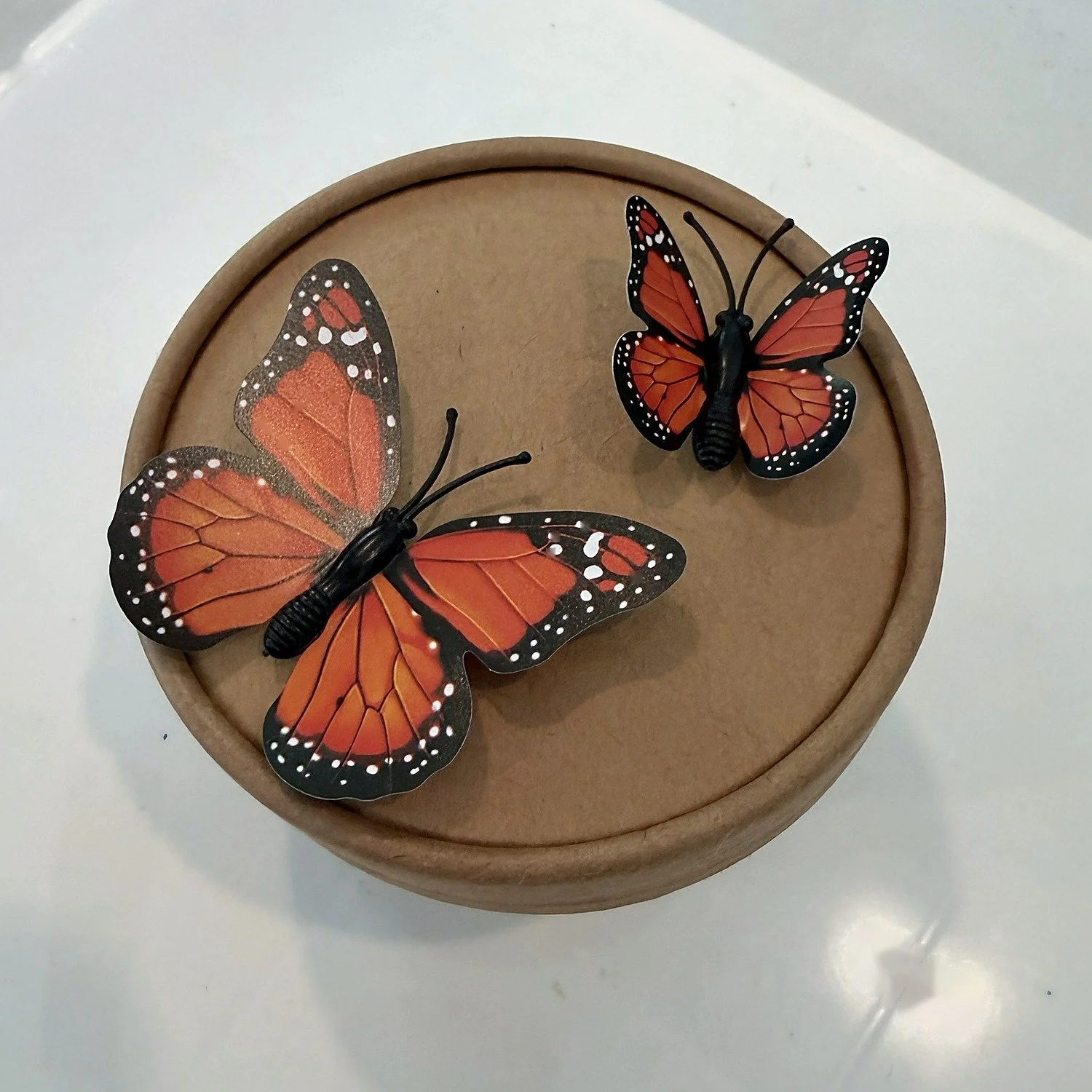
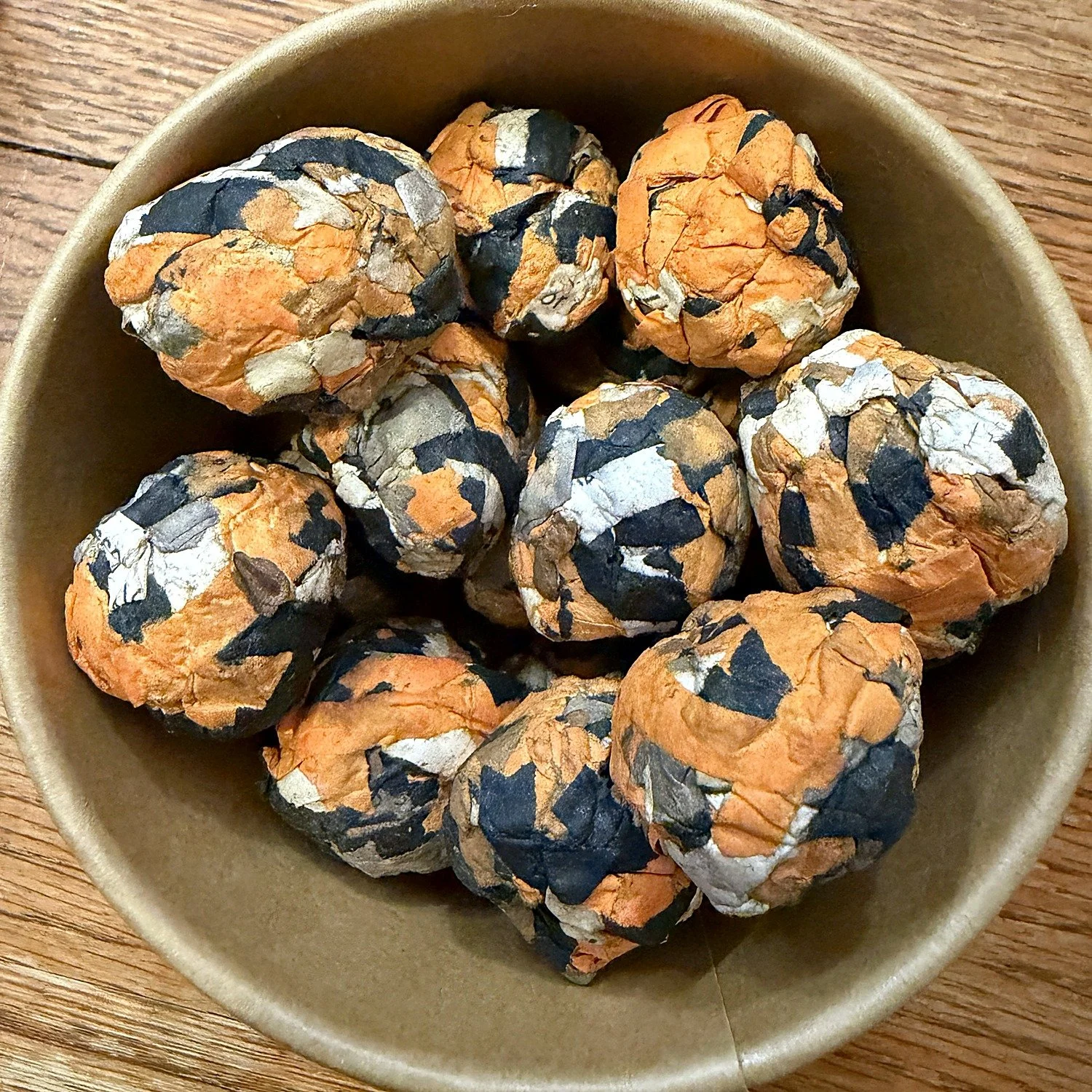
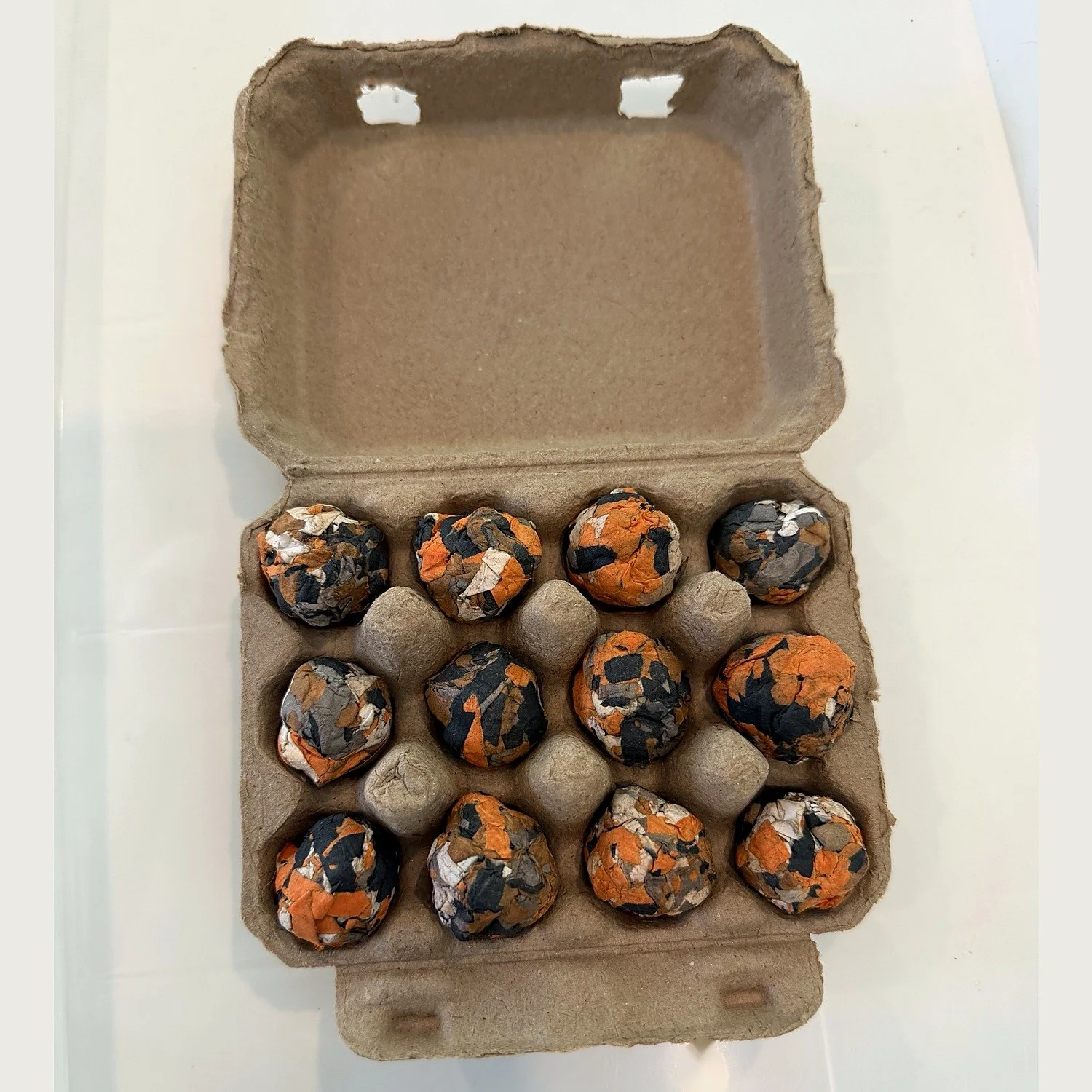
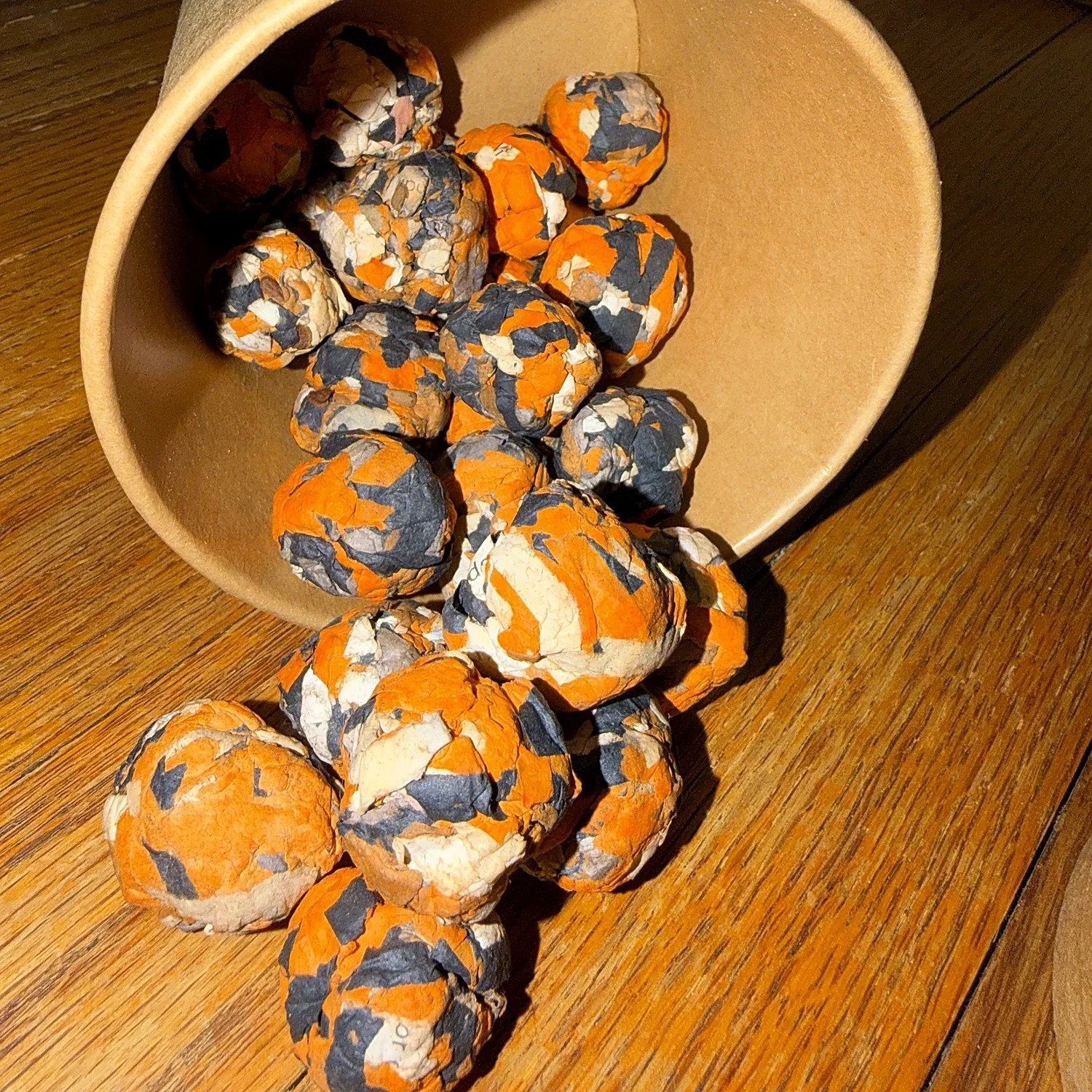
These are handmade recycled-paper seed balls packed with common milkweed seed. They're orange and black because that's who they're for. Twelve to a pot, each one packed with the one plant a monarch can’t live without. Throw them somewhere sunny this fall and let winter do the rest. Milkweed seed needs a cold, wet season before it will wake up, so October and November are the right time to plant. That makes you the rare person whose timing is perfect.
Nothing will happen for months. That's not failure, that's the plan. Come spring, you get green. By the second or third summer you get flowers. If you're lucky, you get a striped caterpillar eating the whole thing down to the stem. That's also the plan.
You don't have to fix the planet. You can plant one thing a butterfly actually needs. That counts.
How to plant
Wait for fall. October and November are ideal. Pick a sunny spot with bare soil, somewhere a tall plant is allowed to spread. Press each ball halfway into the soil. Don't bury it. Water once. Walk away. Look for sprouts when the soil warms in spring.
Planting in spring instead? Put the balls in a bag with a damp paper towel and leave them in the fridge for 30 days first. That fakes the winter.
Plant them in the ground, not in the gift pot. The pot has no drainage.
Details
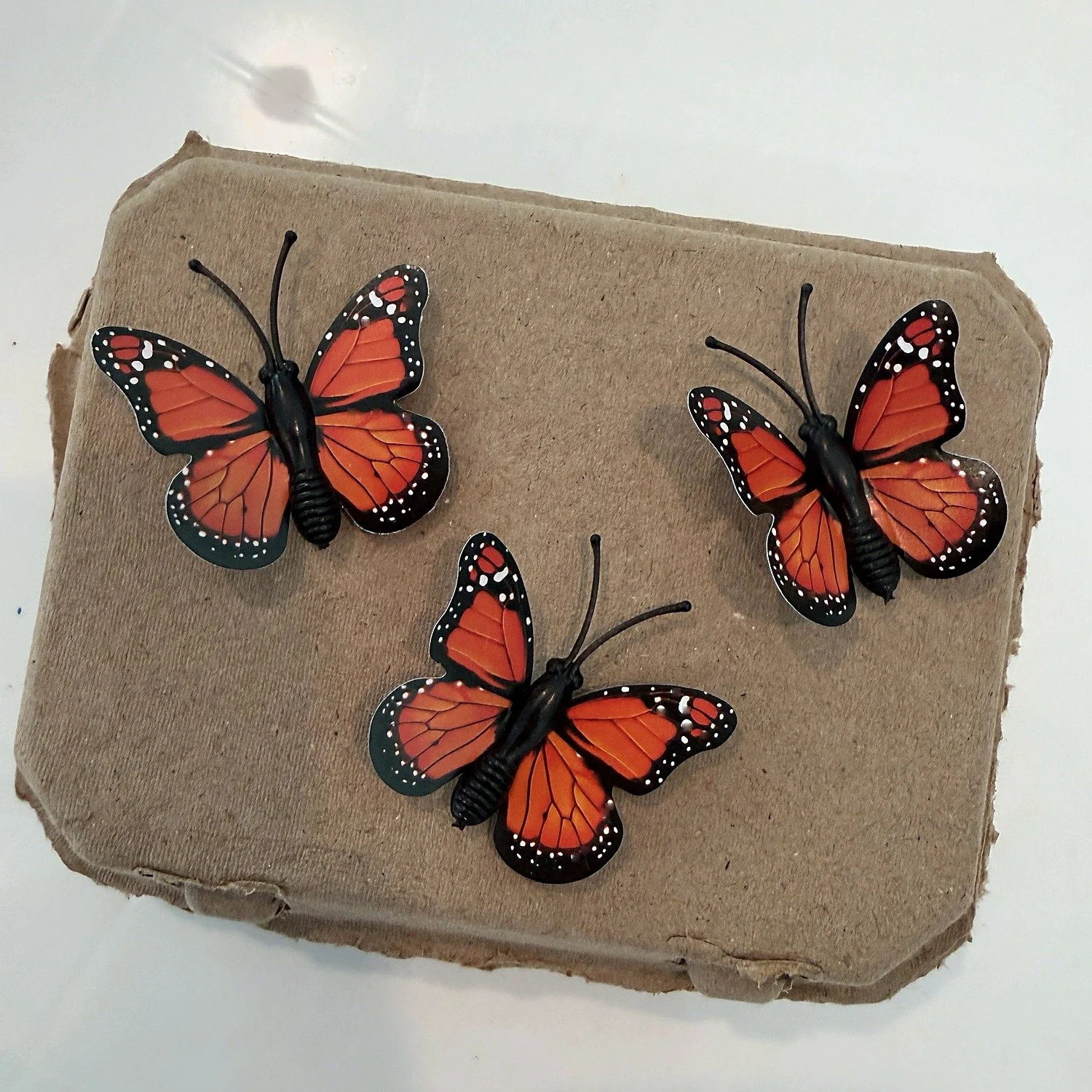
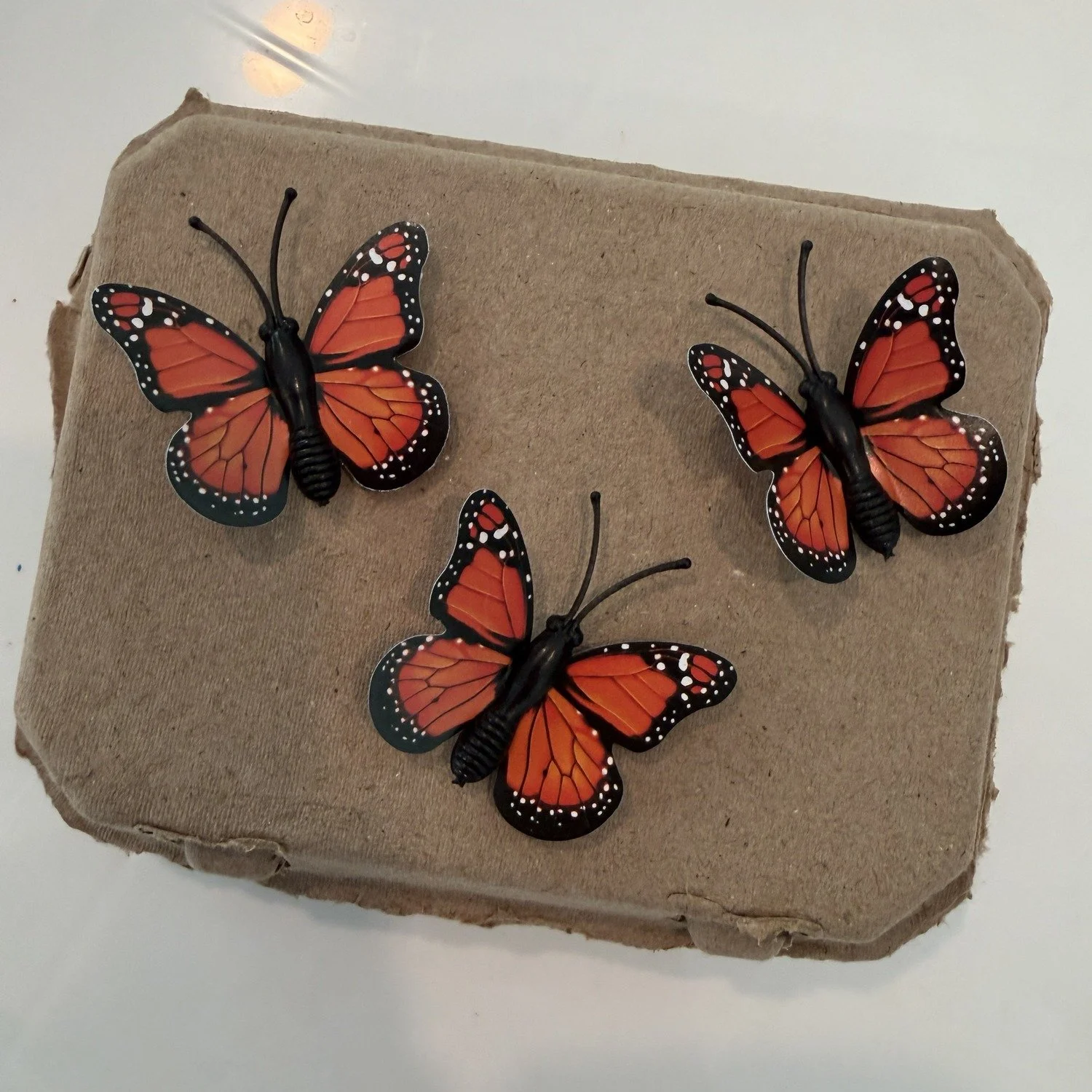
12 handmade seed balls, smaller than the wildflower ones on purpose. Also 6 in a box. Six or more seeds in every ball, from seed that tested at 84% germination. Five live seeds per spot, for a plant that needs one. Pot comes with monarchs on the lid, ready to hand to someone. Carton is the gift you don’t have to wrap. Recycled paper, made by hand in Fairview Park, Ohio. Common milkweed (Asclepias syriaca), native to the eastern and central US. Perennial. Full sun. Grows 3 to 5 feet and spreads by underground runners, so give it room. Free US shipping. We ship these east of the Rockies, where common milkweed belongs.
Good to know
Milkweed sap is toxic if eaten and irritates eyes. Plant it away from pets that chew and animals that graze, and wash your hands after handling broken stems. The monarchs don't mind. It's how they became poisonous too.
Good for
The friend who needs to throw something and would like it to matter. The gardener who has everything except caterpillars. Teachers, grandparents, and the kid who won't stop talking about butterflies. Anyone who wants proof by next summer that they did one good thing.
Want flowers by summer instead? The wildflower pollinator mix is here.
Behind every monarch is a weed nobody thanked. Milkweed is the only thing a monarch caterpillar can eat, and it gets called a weed for its trouble. Plant it anyway.
These are handmade recycled-paper seed balls packed with common milkweed seed. They're orange and black because that's who they're for. Twelve to a pot, each one packed with the one plant a monarch can’t live without. Throw them somewhere sunny this fall and let winter do the rest. Milkweed seed needs a cold, wet season before it will wake up, so October and November are the right time to plant. That makes you the rare person whose timing is perfect.
Nothing will happen for months. That's not failure, that's the plan. Come spring, you get green. By the second or third summer you get flowers. If you're lucky, you get a striped caterpillar eating the whole thing down to the stem. That's also the plan.
You don't have to fix the planet. You can plant one thing a butterfly actually needs. That counts.
How to plant
Wait for fall. October and November are ideal. Pick a sunny spot with bare soil, somewhere a tall plant is allowed to spread. Press each ball halfway into the soil. Don't bury it. Water once. Walk away. Look for sprouts when the soil warms in spring.
Planting in spring instead? Put the balls in a bag with a damp paper towel and leave them in the fridge for 30 days first. That fakes the winter.
Plant them in the ground, not in the gift pot. The pot has no drainage.
Details
12 handmade seed balls, smaller than the wildflower ones on purpose. Also 6 in a box. Six or more seeds in every ball, from seed that tested at 84% germination. Five live seeds per spot, for a plant that needs one. Pot comes with monarchs on the lid, ready to hand to someone. Carton is the gift you don’t have to wrap. Recycled paper, made by hand in Fairview Park, Ohio. Common milkweed (Asclepias syriaca), native to the eastern and central US. Perennial. Full sun. Grows 3 to 5 feet and spreads by underground runners, so give it room. Free US shipping. We ship these east of the Rockies, where common milkweed belongs.
Good to know
Milkweed sap is toxic if eaten and irritates eyes. Plant it away from pets that chew and animals that graze, and wash your hands after handling broken stems. The monarchs don't mind. It's how they became poisonous too.
Good for
The friend who needs to throw something and would like it to matter. The gardener who has everything except caterpillars. Teachers, grandparents, and the kid who won't stop talking about butterflies. Anyone who wants proof by next summer that they did one good thing.
Want flowers by summer instead? The wildflower pollinator mix is here.